Hiring a qualified truck driver in Europe now takes an average of 6 to 8 weeks, according to industry reports. In Germany alone, over 80,000 driving positions remain unfilled. Across the EU, the International Road Transport Union (IRU) estimates a combined shortage exceeding 400,000 drivers.
For transport companies, logistics operators, and fleet managers, the question is no longer whether you should expand your hiring channels. It is how to do it faster, at lower cost, and across borders.
This guide covers the most effective hiring methods available in 2026, the legal requirements for cross-border recruitment, and practical steps to reduce your time-to-hire.
The Scale of the Problem
The European driver shortage is not a temporary spike. It is a structural issue driven by demographics and working conditions.
| Country | Estimated Shortage | Key Factor |
|---|---|---|
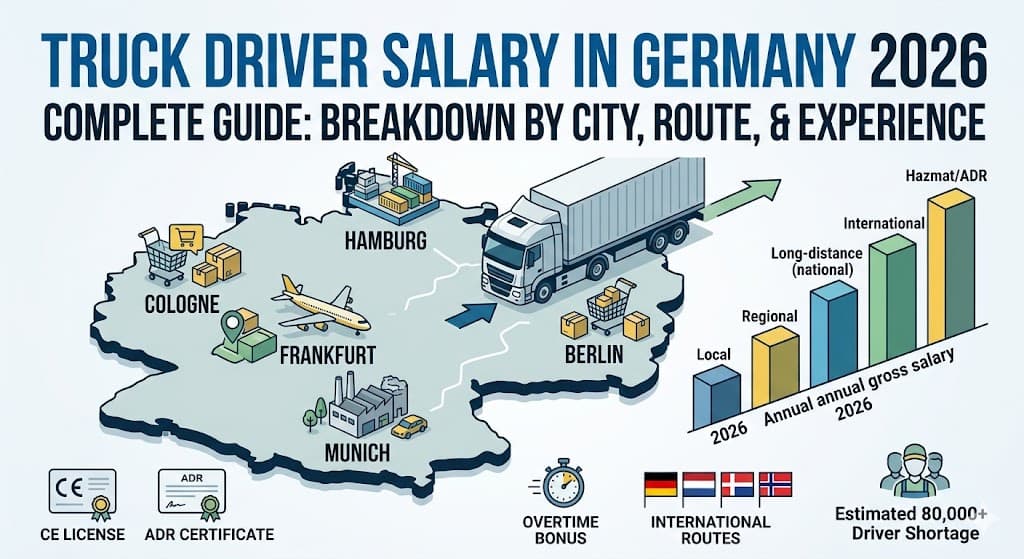
| Germany | 80,000+ | Aging workforce, low new entrants |
| United Kingdom | 70,000+ | Post-Brexit restrictions, retirement |
| France | 43,000+ | Working conditions, competition from other sectors |
| Poland | 30,000+ | Growing demand, aging workforce |
| Spain | 25,000+ | Low pay relative to cost of living |
| Italy | 20,000+ | Aging population, regulatory burden |
According to IRU’s 2024 Driver Shortage Report, the average age of a European truck driver is 47. Fewer than 7% of new drivers entering the profession are under 25. Without significant changes in recruitment strategy, the shortage is projected to worsen through 2030.
For companies, this means the traditional approach of posting a job ad and waiting is no longer viable. Proactive, multi-channel recruitment is now a requirement.
Traditional Hiring Channels and Their Limitations
Most transport companies in Europe still rely on a handful of methods to find drivers.
- Job boards — Platforms like Indeed, StepStone, and Pracuj.pl remain popular but increasingly crowded. According to the IRU’s 2024 Global Driver Shortage Report, 70% of transport firms now report severe recruitment difficulty, and unfilled driver positions across Europe nearly doubled between 2022 and 2024. Drivers with CE licenses receive multiple offers and respond primarily to listings with transparent salary information.
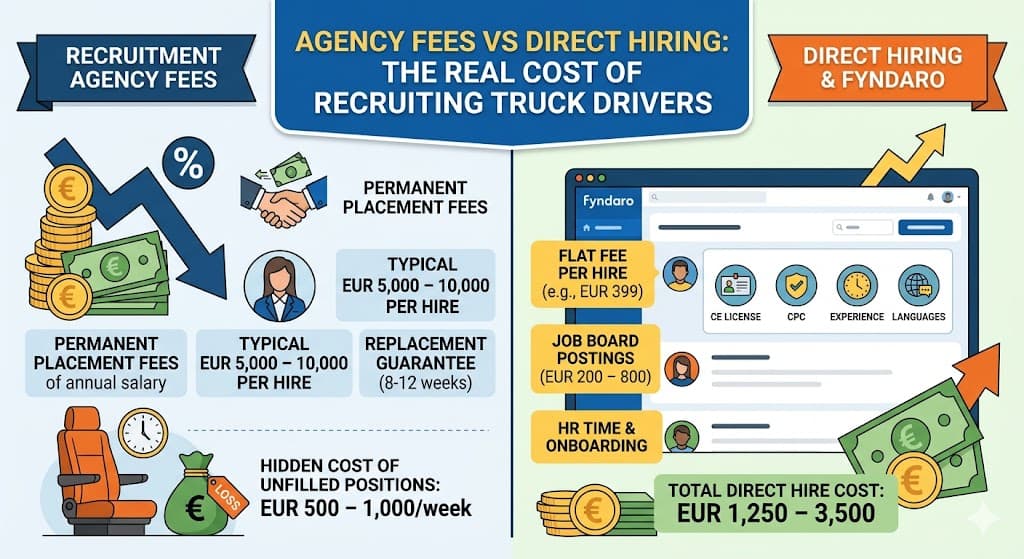
- Recruitment agencies — The typical fee is 15% to 25% of the driver’s annual salary. For a driver earning EUR 36,000, that translates to EUR 5,400 to EUR 9,000 per hire. Agencies handle screening and paperwork, but costs add up quickly when hiring multiple drivers.
- Referrals and social media — Driver referrals remain effective (many companies offer EUR 500 to EUR 1,500 referral bonuses), but limited in scale. Facebook groups and online communities generate leads but are time-consuming to manage.
The Direct Hiring Model
A growing number of transport companies are shifting toward direct hiring platforms that connect them with verified drivers without agency intermediaries.
The advantages are straightforward:
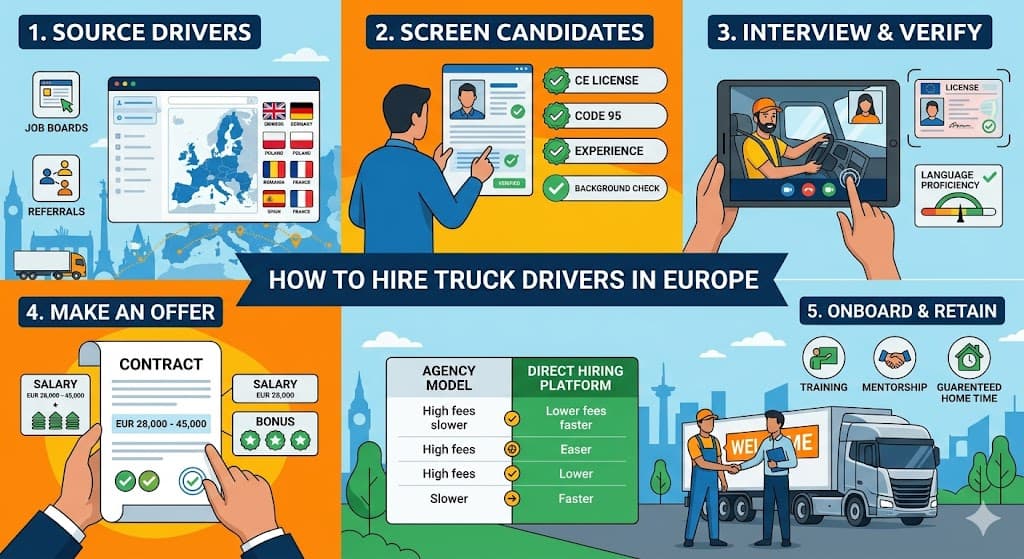
| Factor | Agency Model | Direct Hiring Platform |
|---|---|---|
| Cost per hire | EUR 5,400 – 9,000 | EUR 200 – 500 (platform fees) |
| Time to first candidate | 2–4 weeks | 1–5 days |
| Candidate pool | Agency’s database | Cross-border, multi-country |
| Transparency | Limited (agency screens) | Full driver profiles visible |
| Contract flexibility | Often temp-to-perm | Direct permanent hire |
Platforms like Fyndaro allow transport companies to browse verified driver profiles across 25 European countries, filter by location, license type, and experience, and contact drivers directly. This removes the agency fee entirely and gives companies full control over the hiring process.
Cross-Border Hiring Across Europe
The most significant untapped opportunity for European transport companies is cross-border recruitment.
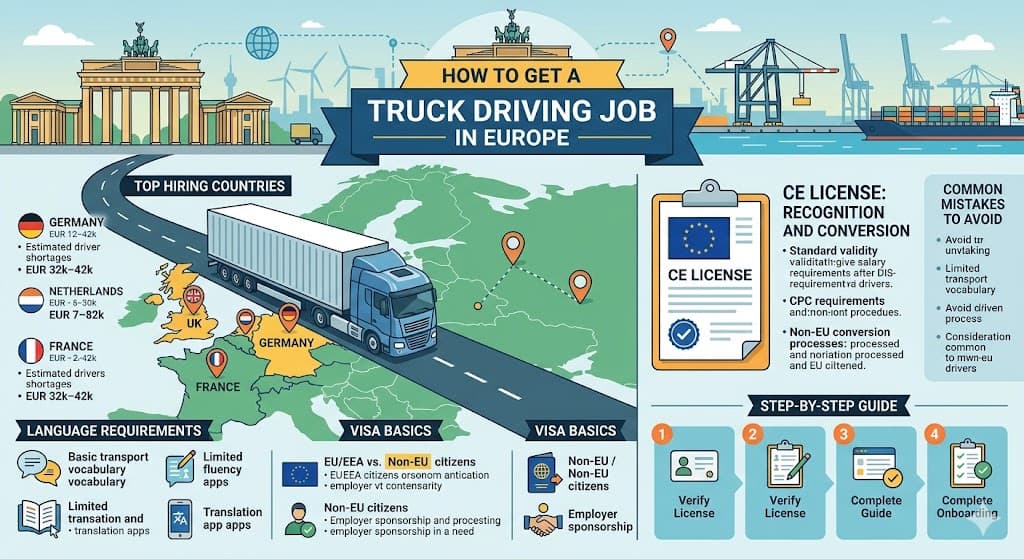
The opportunity is clear. Europe has experienced, CE-licensed drivers actively seeking new positions across the continent. EU freedom of movement makes cross-border hiring straightforward — no work permits required between member states, and CE licenses are mutually recognized.
Legal Requirements for Cross-Border Hiring
Hiring drivers from other EU member states is straightforward under EU freedom of movement, but there are specific regulations to follow.
- EU driving license recognition — CE licenses issued in any EU member state are valid across the entire EU. No conversion or additional testing is required. Drivers need a valid Driver Qualification Card (Code 95), which must be renewed every five years through periodic training.
- Posted Workers Directive — If you are sending drivers on routes through multiple EU countries, the Posted Workers Directive applies. Drivers must receive at least the minimum wage of the country where they perform “a substantial part” of their work. For international drivers based in Germany, German minimum wage and working conditions apply.
- Social security and working time — Under EU Regulation 883/2004, an A1 certificate confirms which country’s social security system applies. EU Regulation 561/2006 governs driving and rest times: maximum 9 hours per day (extendable to 10 twice per week), with mandatory breaks and weekly rest periods.
Practical Steps for Cross-Border Recruitment
- Define requirements clearly — Specify CE license, certifications (ADR if applicable), language preferences, and route types. Be transparent about salary and conditions.
- Post in the right markets — Poland, Romania, Czech Republic, Hungary, and the Baltic states are the strongest sources.
- Offer relocation support — Even basic assistance with housing and administrative registration significantly improves acceptance rates.
- Provide contracts in the driver’s language — This reduces misunderstandings and builds trust from day one.
- Plan onboarding — Pair new international drivers with an experienced colleague during their first two weeks.
Step-by-Step Hiring Process
For companies ready to start hiring, here is a practical workflow.
- Step 1: Define the role — Route type, schedule, vehicle type, required certifications, salary range.
- Step 2: Choose your channels — Direct platform (lowest cost, widest reach), job boards (broad exposure), referrals (highest quality), agency (for specialized or urgent needs).
- Step 3: Screen candidates — Verify CE license validity, check Code 95 status, review driving record, confirm language skills if required.
- Step 4: Interview — Video calls work well for cross-border hiring. Focus on experience with relevant route types, safety record, and availability.
- Step 5: Make an offer — Be specific about gross salary, overtime rates, bonuses, vehicle type, home time, and any relocation support.
- Step 6: Complete paperwork — Employment contract, social security registration, A1 certificate if applicable, vehicle assignment.
- Step 7: Onboard — Route familiarization, company systems training, safety briefing, introduction to the team.
Retention: Keeping the Drivers You Hire
Based on industry estimates, the full cost of driver turnover (recruitment, training, lost productivity) ranges from EUR 8,000 to EUR 15,000 per departure. Retention is as important as recruitment.
According to a National Academies study on driver retention, pay is the primary factor driving turnover, but working conditions and management quality rank nearly as high. Companies investing in driver satisfaction (regular vehicle maintenance, consistent schedules, clear communication) can cut turnover significantly — one major carrier reduced turnover approximately in half by combining pay increases with better working conditions.
Frequently Asked Questions
Recruitment agency fees in Europe typically range from 15% to 25% of the driver’s annual gross salary. For a driver earning EUR 36,000 per year, that means EUR 5,400 to EUR 9,000 per hire. Direct hiring platforms like Fyndaro significantly reduce this cost, with fees typically under EUR 500 per hire.
Yes. Under EU freedom of movement, Polish drivers (and drivers from any EU member state) can work in Germany without a work permit. Their CE license is fully recognized. You need to ensure compliance with the Posted Workers Directive regarding pay and conditions, and handle social security coordination via an A1 certificate.
The average time-to-hire using traditional methods (job boards, agencies) is 6 to 8 weeks. Direct hiring platforms can reduce this to 1 to 3 weeks by providing immediate access to verified, available drivers across multiple countries.
At minimum, verify the driver’s CE license (Class C+E), Driver Qualification Card (Code 95), and medical fitness certificate. For specialized roles, check ADR certification (dangerous goods), digital tachograph card, and any country-specific requirements. All EU-issued certifications are valid across member states.
The Posted Workers Directive ensures that drivers working in an EU country other than their home country receive at least the minimum pay and working conditions of the host country. For example, a Polish driver working primarily in Germany must receive at least German minimum wage. This applies to pay, working time, and basic employment conditions.
Start Hiring Drivers Across Europe
The driver shortage is not going away. Companies that adapt their recruitment strategy, particularly by embracing cross-border hiring and direct platforms, will have a significant advantage in securing qualified drivers.
Start Hiring on FyndaroUseful Resources
- IRU Driver Shortage Report — Global driver shortage data
- EU Driving Time Regulations — Official driving hours rules
- Eurostat Road Transport Statistics — EU freight transport data
- Bundesagentur für Arbeit — German employment agency
- BGL (German freight association) — German road haulage association
- Truck Driver Jobs in Europe — Browse jobs across 25 countries
- Hire Truck Drivers in Europe — Find verified drivers